

-
A Story about needle, wire, and Commitment
During my childhood, Qin embroidery was simply a beautiful, brightly colored picture hanging in my home—an unnamed object that quietly accompanied me as I grew up. I had never been curious about the story behind Qin embroidery. I did not know that it was connected to a traditional embroidery technique from Shaanxi, nor did I realize that it had once come close to disappearing.
The first time I truly became aware that Qin embroidery existed as a distinct form of embroidery was through the regretful sighs of my parents. From their conversation, I learned that Zhang Yiyuan, a representative inheritor of Qin embroidery and also a relative of my family, had passed away. My father pointed to the embroidery on the wall and said to me, “Look, this is one of Zhang Yiyuan’s works.” I looked at the Qin embroidery hanging on the wall. It depicted a peony in full bloom, vivid in color and seeming to shimmer in the light. For the first time, I began to ask what Qin embroidery really was and what story lay behind this piece that had been hanging in my home for so many years.
01 ·
The Root of the Qing Embroidery
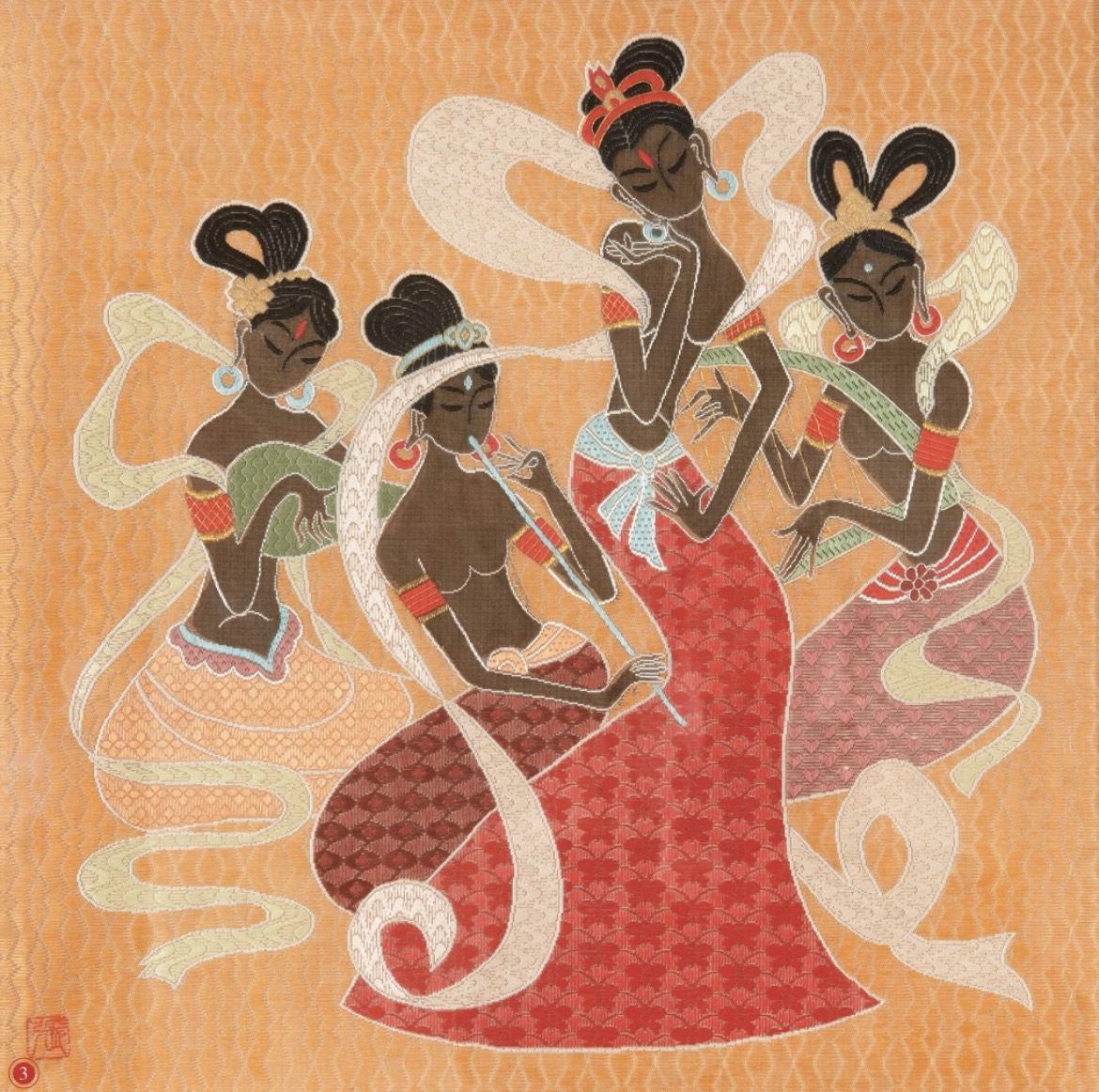
As I delved deeper into the subject, I discovered that the history of Qin embroidery is not a simple tale of a thousand-year-old tradition that has remained unchanged. The history of Qin embroidery can be traced back to the Qin Dynasty, which existed from 221 BC to 206 BC. At that time, a kind of art form called Nshia Embroidery emerged in the Qin Dynasty. Nasha Embroidery was the predecessor of Qin Embroidery. The history of Qin embroidery is long and profound. Changes in clothing, daily life, and production made these traditional techniques less common, and fewer people continued to practice them. By the twentieth century, nasha embroidery had become rare, with only limited examples and traces of the old technique remaining.
02 ·
Qin embroidery has once again come into the public eye.
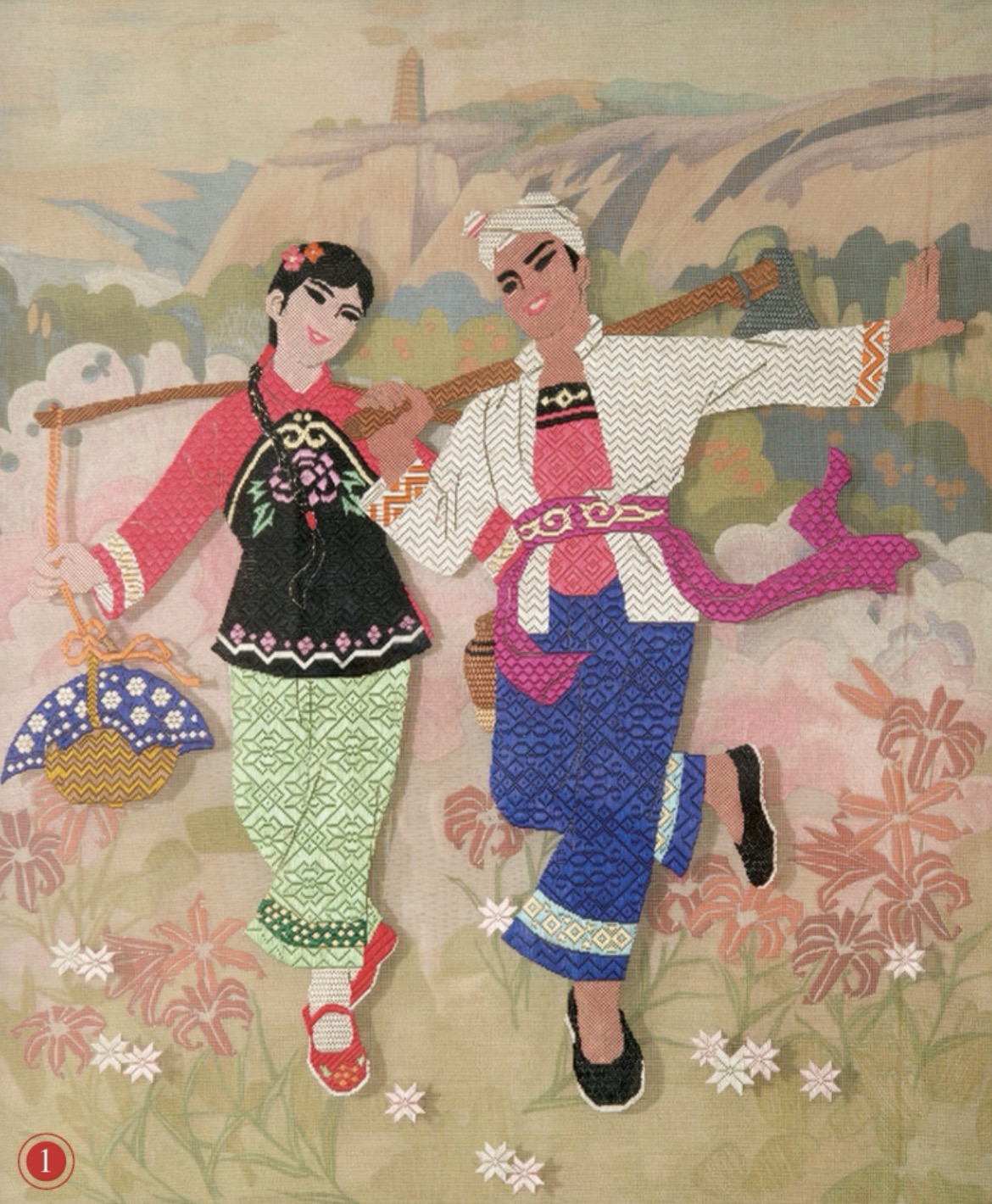
The modern form of Chuanluo embroidery began to develop in the 1970s. At that time, Zhang Yiyuan and several other embroidery artists in Shaanxi started looking for a style that could truly represent the region. During this process, Zhang Yiyuan found an unfinished piece of embroidery made on gauze in a collection of traditional folk art. She realized that it was connected to an old embroidery technique called Nasha embroidery, which had already become very rare.
After that, she began working with other embroidery artists to study the old technique and bring it back. However, they did not simply copy what people had done in the past.
They kept some of the traditional methods, but also created new stitches, patterns, and designs. Little by little, this old technique developed into a new form of embroidery. Because the thread was stitched through gauze, it became known as Chuanluo embroidery. Later, because of its strong connection to Shaanxi, it was also called Qin embroidery. Since then, the thousand-year-old Qin embroidery has finally regained its vitality. Under the skilled hands of the creators, it has been infused with warmth. Qin Xiu was once again seen by the public.
03 ·
The perseverance of the inheritors of Qin embroidery
Not long after Chuanluo embroidery was created, Qin embroidery entered its most successful period in the 1980s. Its works were exported to Japan, where they were sometimes praised as “Tang embroidery,” and Qin embroidery gradually became a representative form of Shaanxi embroidery. However, as state-owned embroidery factories went through restructuring, many skilled workers left, and the newly revived Chuanluo embroidery once again faced the risk of disappearing.
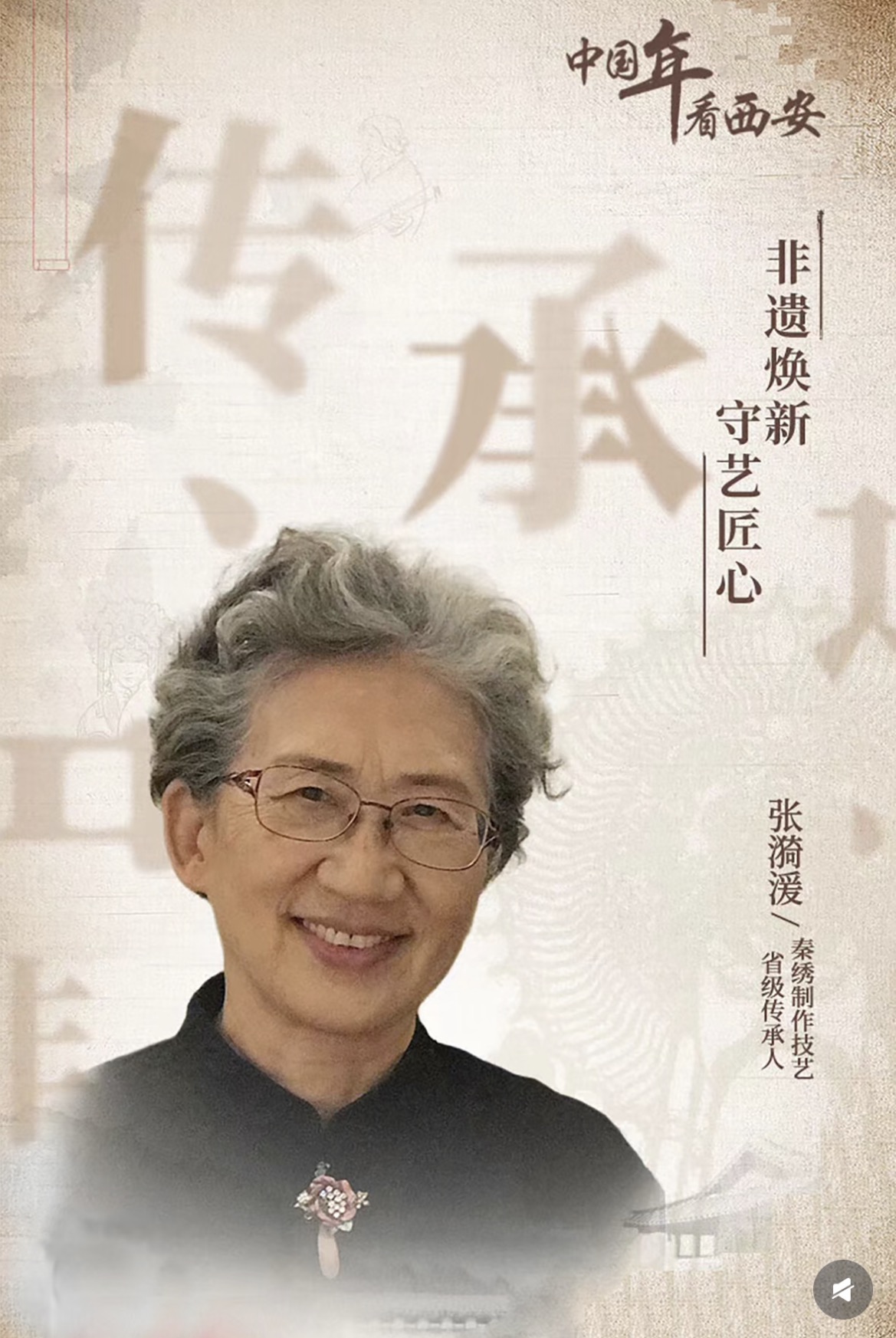
At this critical moment, Zhang Yiyuan continued to devote herself to Qin embroidery even after her retirement. The craft brought her little income, but she still spent a great amount of her own time, energy, and money developing new designs and studying new stitches. When Qin embroidery was in danger of being lost again, she once said, “Qin embroidery cannot disappear. I have to keep doing it.” In 2012, although she received national recognition for her work in embroidery, she was still worried that Qin embroidery had no clear future. She wrote a letter asking the provincial government for help and support. A year later, in 2013, Qin embroidery was officially listed as a provincial-level intangible cultural heritage of Shaanxi. Even at the age of 75, Zhang Yiyuan was still thinking about what more she could do to keep Qin embroidery alive.
04 ·
The differences between Qin embroidery and other types of embroidery
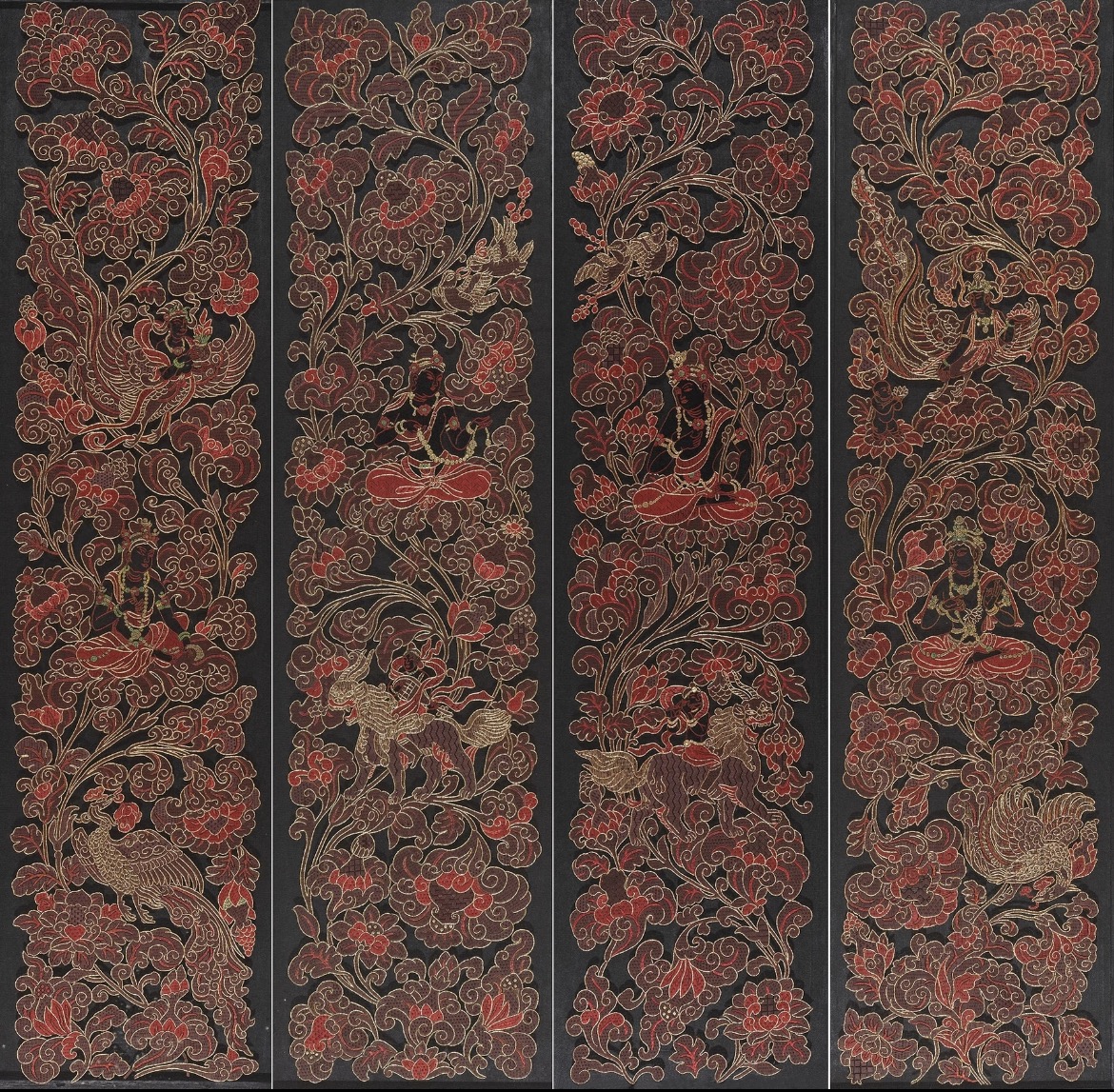
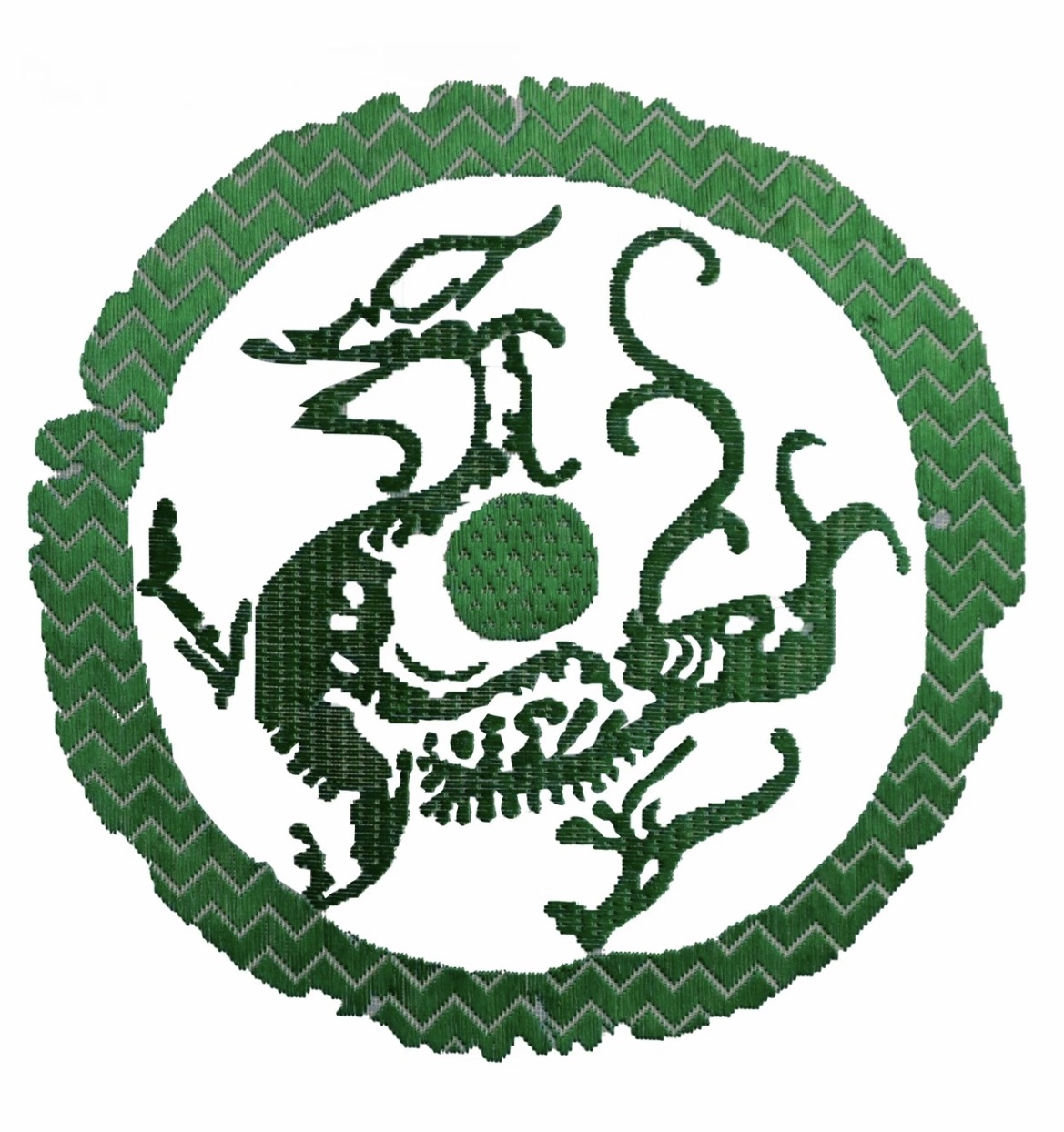
Zhang Yiyuan’s dedication also raises another question: what makes Qin embroidery worth preserving? One of its most special features is the way it can create different colors with the same thread. In the work Zhuque Wadang, for example, the body of the vermilion bird seems to contain both dark and light brown, but the embroiderer actually used only one color of thread. The difference comes from the direction of the stitches. When the stitches face different directions, they reflect light differently, making the same thread appear lighter or darker. This effect depends greatly on the embroiderer’s sensitivity to light, color, and angle, which is also one reason Qin embroidery relies so heavily on hand embroidery rather than machine production.
Another important feature is its strong connection to Shaanxi culture and history. Different Chinese embroidery traditions often have their own favorite subjects and styles, while Qin embroidery carries a strong sense of the culture of the Han and Tang dynasties. Its patterns often draw from local history, traditional symbols, and the culture of Shaanxi. Since it is embroidered on gauze, artists can also create many different patterns by changing the direction and arrangement of the stitches. Because of this, Qin embroidery is not only decorative. Its colors, patterns, and techniques all reflect the history and cultural character of the region where it was created.
05 ·
Keeping Qin Embroidery Alive
Today, Qin embroidery still faces the danger of disappearing. In a country as large as China, only a little more than ten people are still devoted to making and preserving this form of embroidery. The question now is not only how to protect the technique itself, but also how to bring Qin embroidery back into people’s daily lives. If it can become something that people are willing to buy, use, collect, or see in exhibitions, more people may have the chance to know about it. Finding a way for Qin embroidery to enter the modern market while still keeping its traditional value is one of the most important challenges it faces today.
When I stand in front of the Qin embroidery hanging in my home again, I see something very different from what I saw as a child. As the light changes, the threads seem to change color with it. This time, what moves me is no longer only its beauty, but also the history, culture, dedication, and hard work behind every stitch. It also makes me realize that passing down intangible cultural heritage is not only about passing down a technique. It is also about passing down a spirit, a sense of dedication, and a love for tradition. We should help more people know about Qin embroidery, encourage more people to understand it, and give more people the chance to learn and take part in it. Only in this way can Qin embroidery continue to live on, not only as a craft from the past, but as a tradition carried forward by new generations.
Research Notes
Works Cited
- Liu, Xiaohua. “When did Qin embroidery enter ordinary people's homes?” Xi'an Daily, 2017, https://www.cnr.cn/sxpd/sx/20170228/t20170228_523626378.shtml.
- “Originating in the Qin Dynasty, Qin embroidery became the "private favorite" of Austrian noblewomen; this is what it is all about.” 27 February 2017, https://m.jiemian.com/article/1137977.html.