

Introduction
More Than a Cute Name
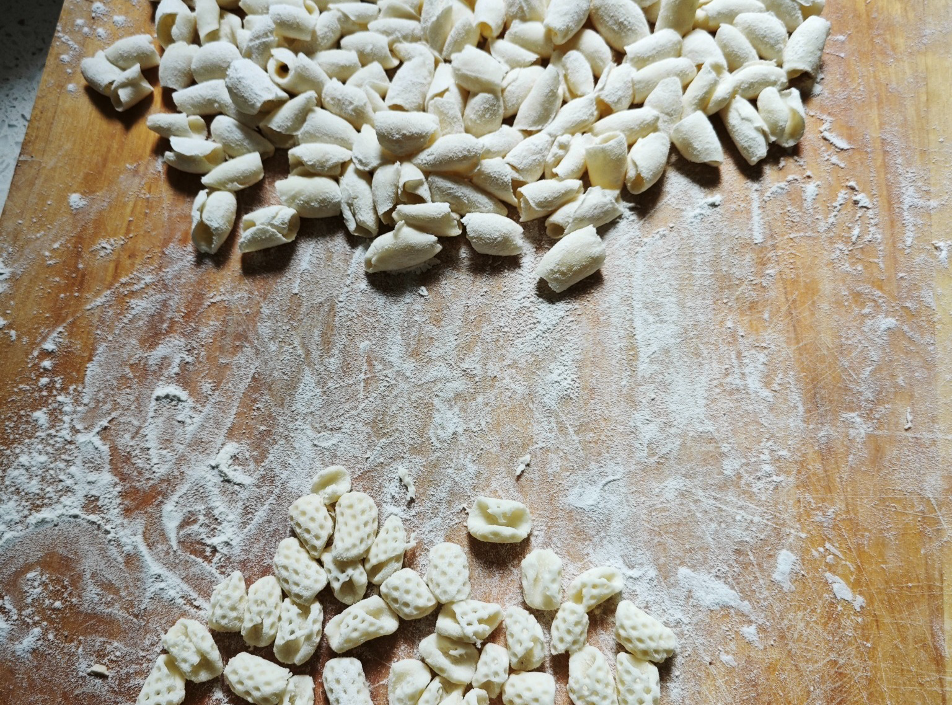
When looking back at the photos I've taken, I always notice the same detail: the tiny curl on each piece of dough. That's where the name 猫耳朵, or "cat ears," comes from. Once you see that shape, the name is pretty obvious.
At first, I thought I would simply write about how the noodles are made. However, as I got deeper into the culture of Shanxi noodle, the subject revealed itself to be far richer than I had anticipated. While the shape comes from a simple manual gesture, it also reflects a long-standing local dietary tradition centered on grains.
I wanted to explore the role this noodle plays in Shanxi's culinary culture and the specifics of its preparation, yet I also found myself wondering: what exactly is left out of a finished photograph?
01 ·
Why Shanxi Has So Many Noodles
Shanxi is famous for noodles, and the climate helps explain part of it. With much of the province being mountainous and arid, crops such as wheat, millet, buckwheat, corn, and oats have long been staples. Consequently, people have developed a wide array of culinary techniques to transform flour and dough into delicious meals.
According to Xinhua News Agency, there are over thirty distinct techniques for crafting these wheat-based dishes in Shanxi. Dough can be processed through methods such as slicing, shaving, pulling, pressing, rolling, and pinching - and these are merely the fundamental techniques. "Cat's Ears" (猫耳朵) is just one of the many shapes these dishes take.
I was surprised by the casual tone used to describe "Cat's Ears"(猫耳朵) in the source material. It is not treated as a rare delicacy or a ceremonial food; Xinhua even lists it as a fun shape that children love. This description suggests that the charming name "Cat's Ears" isn't just a gimmick to grab attention - it reflects the dish's status as a simple, ordinary part of everyday life.
02 ·
From Dough to "Cat's Ears"
Before becoming "Cat's Ears," the dish starts out as nothing more than a standard lump of dough. To make it, the dough is first rolled into a long strip and then cut into small pieces. In the photo I took, the kitchen knife dominates the frame, yet the act of cutting is merely a preparatory step in the overall process.
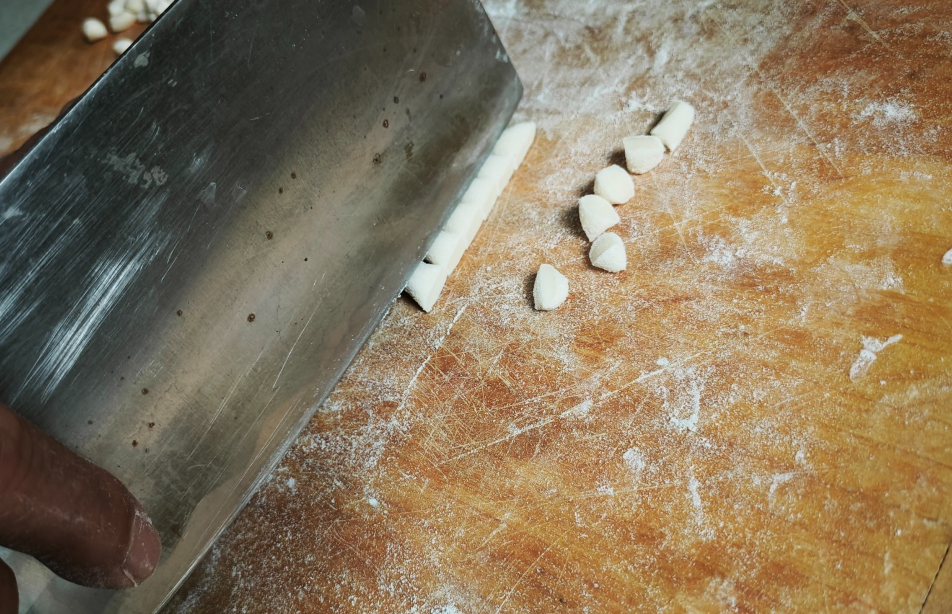
The key to shaping lies in the thumb. You press a small piece of dough against a cutting board or a textured surface and push it forward. As it moves, the dough flattens and curls, forming that signature small, hollow shape.
In words, the process seems deceptively simple: press, push, release. But repeating the action hundreds or thousands of times is a different story. Even the slightest variation in pressure alters the dough's thickness and the tightness of the curl. While the handmade pieces may look alike, no two are ever exactly the same.
03 ·
The Thumb: The Key Tool
In the first photo, the cleaver appears to be the primary tool, but that is not the case. It is actually the thumb that does the shaping. In exploring the craft of Shanxi noodle-making, I found that the essence of the technique often boils down to a single, practiced hand movement.
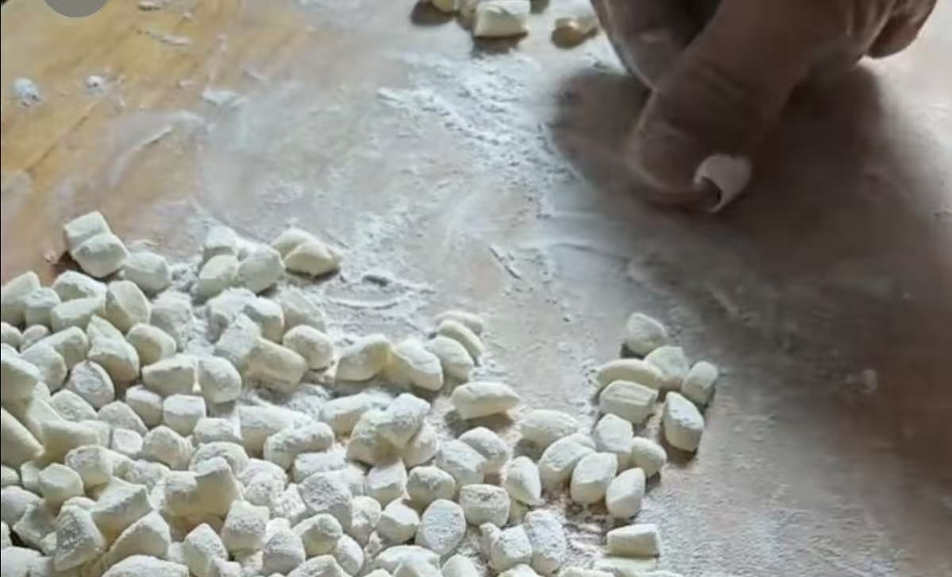
A 2026 Economic Daily once reported that Han Linbao, a master of Shanxi noodle-making, takes only about 0.3 seconds to shape a single "cat's ear" (猫耳朵) and can produce thousands in an hour. The figure is staggering. Yet, it is important to remember that every single piece is still shaped by hand - just at incredible speed.
The ingredients are simple; the real challenge lies in turning the movement into muscle memory. It requires repeated practice until you can perform the task fluidly, without needing to pause and adjust the shape of each piece individually.
Compared to the finished dish served in a bowl, the photograph taken on the cutting board captures the essence of the process far better. Flour is scattered about, and the small pieces of dough - varied in shape - are dotted across the surface; some are smooth, while others bear deep indentations from the board. The image conveys a sense of being "unfinished," as it documents the dish in the midst of creation.
04 ·
Not Every Tradition Needs a Legend
I once spent time trying to uncover the definitive origin story of "Cat's Ears" (猫耳朵), expecting to find a famous inventor or an ancient myth. However, reliable sources offered no such details; most simply categorized "Cat's Ears" as part of Shanxi's vast and rich noodle culture.
At first, I wondered if I had missed something - after all, having a captivating legend would have made writing this section much easier. Yet, the more I read, the more I felt that no such legend was necessary. "Cat's Ears"(猫耳朵) is simply an everyday food that people have been making for generations, and that very fact seems to be a key reason for its enduring popularity.
Xinhua News Agency once described a typical home-style Shanxi noodle meal: simple accompaniments like stir-fried tomato and egg, vinegar, and cucumber. While specific pairings and flour varieties might differ from household to household, that signature shape remains constant.
When people sit down to enjoy this meal, there is no need to label it "Intangible Cultural Heritage"; it is perfectly fine for it to remain simply a familiar, comforting home-cooked dish.
05 ·
What the Photos Leave Out
If I could publish only one photo, I would likely choose the shot of the finished dish. The blue floral pattern on the plate looks fresh and clean, and the noodles are clearly visible, making the distinctive shape instantly recognizable.
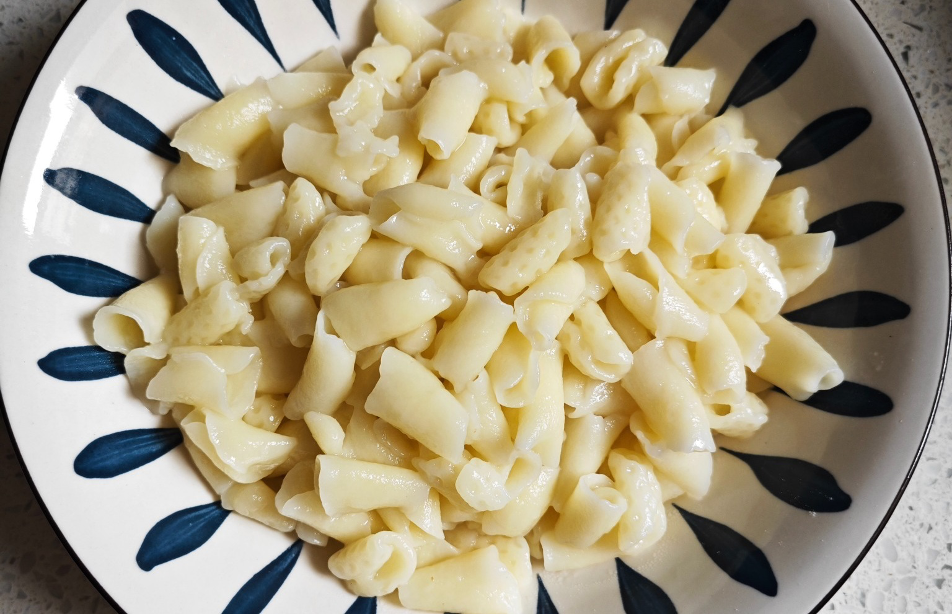
However, that photograph omits the vast majority of the preparation process. You cannot see the flour scattered on the cutting board, the cutting motions, or the intricate detail of a thumb pressing down on each piece of dough - nor can you grasp just how many times that same movement must be repeated. People look at the bowl of noodles and remember its charming name, yet they often overlook the labor-intensive process behind it.
Although the photo taken on the cutting board looks a bit cluttered, I believe it conveys a much richer story. There is no deliberate plating in the frame; the dough pieces vary in size, and flour is scattered about - at a glance, it is clearly a scene of active preparation.
Viewing these three photos together draws my attention to the making process even more than I had anticipated.
06 ·
Beyond Visual Aesthetics
At first, I naturally focused on the unique "cat's ear" shape - it is the detail that immediately catches the eye.
Now, however, I view that shape differently. It evokes the grain-based culinary culture of Shanxi, the variety of noodle dishes crafted from similar ingredients, and the specific finger movements involved in making them.
I still find the finished dish, served in a bowl, highly photogenic. "Beyond visual aesthetics" does not mean that traditional cuisine must appear plain or unadorned when presented online; a great photograph can spark curiosity, even if it cannot tell the whole story.
For me, the essence lies in appreciating the finished dish in the bowl while simultaneously looking back at the work surface where it was created.
"Cat's ears"(猫耳朵) are a humble, everyday food. As the project draws to a close, it is the ordinary details that matter most to me: the flour, the movement of the thumbs, and the repetitive shaping process before the dough finds its way into the bowl.
Research Notes
Works Cited
- Wang, Yijing, and Zhang Zhe. "不止一'面'|山西面食背后的朴素生活哲学." Xinhua News Agency, 4 Sept. 2024. https://www.news.cn/20240904/e2addb2f58214b6c8dcb482c9916c067/c.html
- Wang, Yijing, and Zhang Zhe. "不止一'面'|舌尖上的'面面俱到':千种面食知多少?" Xinhua News Agency, 6 Sept. 2024. https://www.news.cn/local/20240906/2763387d4e90425f801108574d12d3ae/c.html
- Liang, Jing. "面食山西." Economic Daily / China.org.cn, 2 Feb. 2026. https://agri.china.com.cn/2026-02/02/content_43347406.htm
- Shanxi Provincial Department of Culture and Tourism. "来山西,品尝舌尖上的非遗." 3 Nov. 2022. https://wlt.shanxi.gov.cn/xwzx/wlxx/202211/t20221103_7355802.shtml